Machines / Optical potato sorters / DOWNS CropVision Plus
Machine profile · storage intake
DOWNS CropVision Plus
The optical sorter for unwashed potatoes, explained for growers, stores and packers
The DOWNS CropVision Plus is an optical sorter that cleans up unwashed potatoes before storage. Industrial cameras and an AI algorithm check every potato all the way round and send it to one of three outlets: keep, second grade or waste. It handles up to 100 t/h and is made by DOWNS (France, DUBRULLE Group).
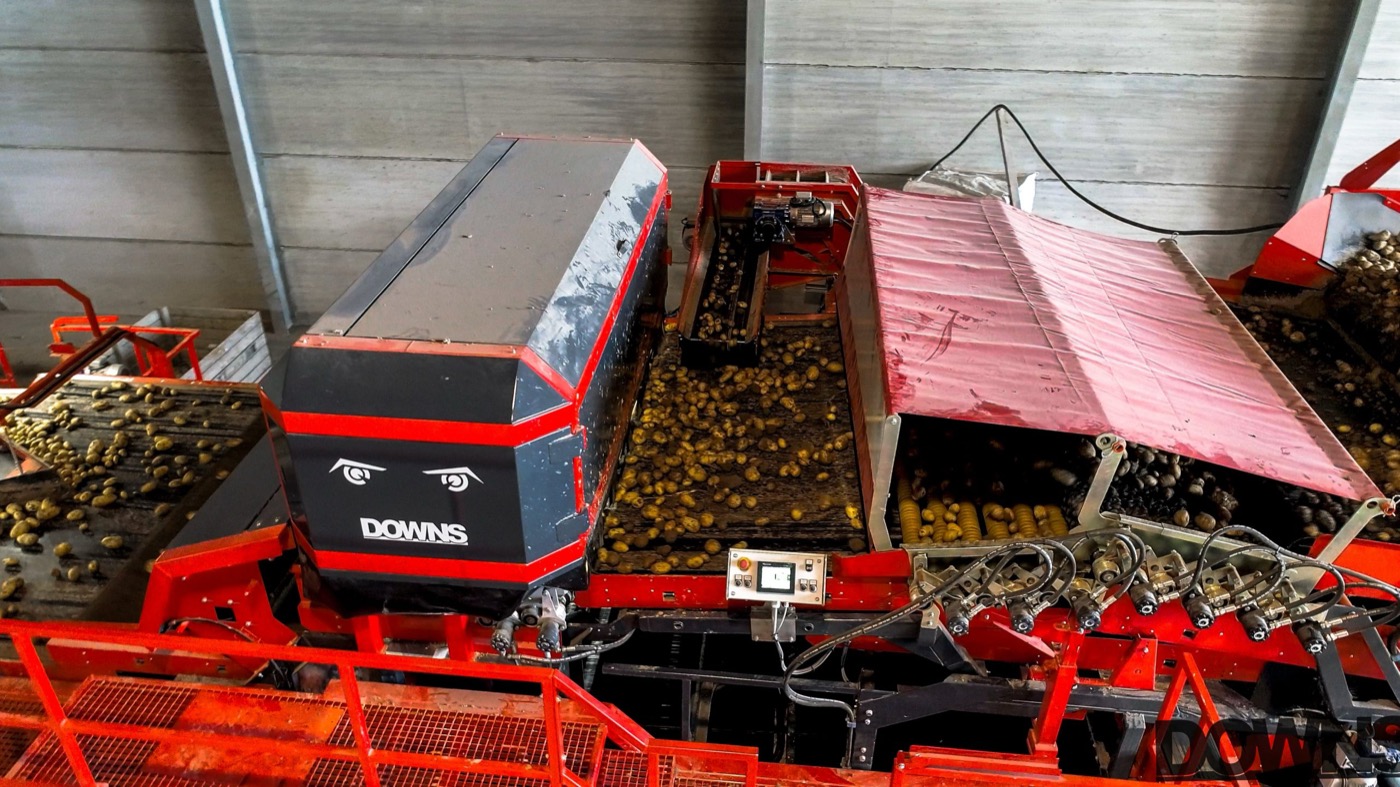
DOWNS CropVision Plus specifications
| DOWNS CropVision Plus | |
|---|---|
| Maker | DOWNS, Sainte-Marie-Cappel, France; part of the DUBRULLE Group since 2006 |
| What it does | Sorts unwashed potatoes by quality before they go into store |
| Vision | Industrial cameras and a patented AI algorithm; the whole surface of each potato (360°) |
| Throughput | Up to 100 t/h |
| Outlets | 3 (product to keep, waste, second grade), set by ejector fingers |
| Classes | 9: clods, stones, other waste, good, green, cut, spoiled, misshapen, cracked |
| Line width | Built into DOWNS receiving hoppers and graders with moving floors up to 2,800 mm |
| Handling | Short drop between the two conveyors to limit knocks |
| Reports | Size and quality of the potatoes in each lot |
| Operation | Touchscreen |
| Plus range: computing | Processors 8 times more powerful than the first CropVision |
| Plus range: lighting and set-up | New lighting; AI help when setting up the sorter |
| Plus range: software | Own operating system for Plus machines; MyCropVision app |
| Crops | Potatoes and onions; the I-CropVision+ also red beet (onions with or without tops) |
What does the CropVision sort out?
Each potato goes into one of nine classes, and the operator chooses which outlet each class goes to.
- Clods: soil lumps that ride in with the crop
- Stones: they bruise the crop on every later move
- Other waste: haulm and trash
- Good potatoes: go to the keep outlet and into store
- Green: light-exposed tubers
- Cut: damaged by the harvester
- Spoiled: rotten tubers that would spread rot in store
- Misshapen: often a second-grade market
- Cracked: growth cracks and splits
The reason to do this before storage, not after: a rotten or cut tuber in a heap or box can start rot in the potatoes around it, and every clod and stone you store takes space, gets in the way of the air and bruises the crop again each time it is moved.
What changed from the first CropVision to the Plus?
| First CropVision | CropVision Plus | |
|---|---|---|
| 360° camera scan with AI | Yes | Yes |
| Up to 100 t/h, 3 outlets | Yes | Yes |
| Processing power | First generation | 8 times more |
| Lighting | First generation | New system |
| Setting the sorter up | By the operator | AI helps with set-up |
| Operating system | CropVision software | New, Plus range only |
| Data off the machine | Lot reports at the machine | MyCropVision app: one place for the data, live view, custom alerts on any device |
| Crops | Potatoes | Potatoes and onions (red beet on I-CropVision+) |
Three ways to install it
1 · Built in
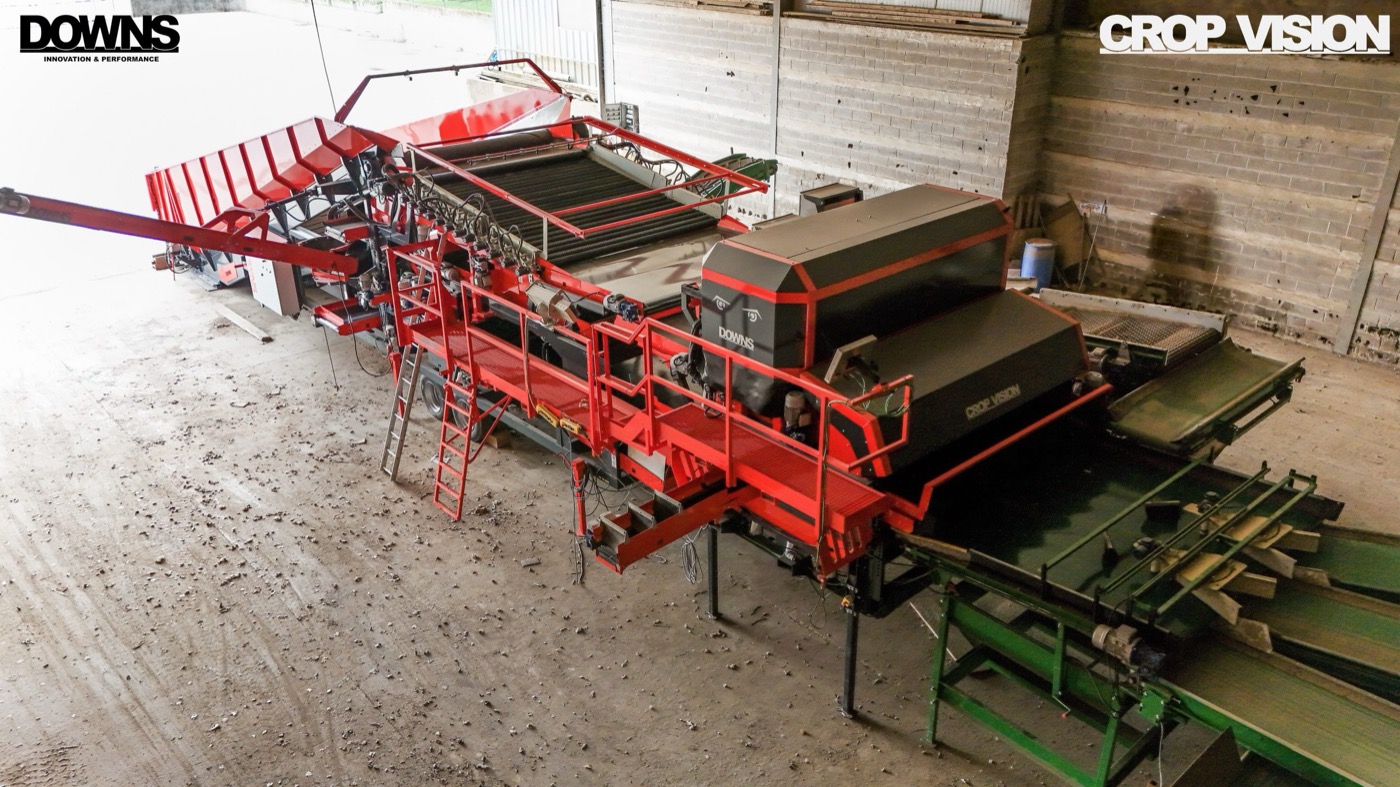
Inside a DOWNS receiving hopper or grader with a moving floor up to 2,800 mm wide. The usual choice when the whole intake line is new.
2 · Standalone I-CropVision+
A self-contained module that fits any existing line, whatever the maker, year or layout, so a farm with another maker’s hopper can add it.
3 · Mobile CropVision+
The sorter on a mobile unit, for operators who move it between fields, stores or customers.
At harvest or at dispatch?
Into store
After a destoner, combi or receiving hopper. Clods, stones and rotten or cut tubers come out before the crop is stored, and each lot is recorded as it goes in.
Out of store
In front of a receiving hopper or after a box tipper. A second quality sort to the buyer’s standard, after months in store.
The data: lot reports and MyCropVision
Since every potato is scanned, the sorter knows the size spread and the quality of each lot. On the Plus range the figures go to the MyCropVision app, which keeps them in one place, shows the machine working live and sends alerts you set yourself to a phone, tablet or PC. If you need export formats or links to farm software, ask before you buy.
Who is it for?
- Growers and stores with big harvest intakes: at a rated 100 t/h, a 1,000-tonne intake is about 10 running hours at full rate, 20 at half.
- Packers and traders who re-sort out of store to a buyer’s standard.
- Farms short of pickers: it takes over the picking table in the weeks when harvest labour is hardest to find.
- Lines from other makers, through the standalone I-CropVision+.
Sorting washed potatoes for retail packs is a different job, usually done by lane or cup graders. Our guide to choosing an optical potato sorter covers both, and DOWNS’s company profile is at DOWNS (DUBRULLE Group).
Other sorters built for unwashed potatoes
| Machine | Maker country | How it sees | Throughput | Notes |
|---|---|---|---|---|
| DOWNS CropVision Plus | France | Cameras + AI, 360° | Up to 100 t/h | 3 outlets; built in, standalone or mobile |
| TOMRA 3A | Norway | Near-infrared multi-spectral + colour sensors | Up to 100 t/h | Finger ejectors; at the farm, at harvest and out of store |
| Haith ProSort | UK | Built around a TOMRA 3A | Up to 100 t/h | Mobile unit with Grimme; removes foreign material and greens, not a size grader |
| Raytec Ingenuity | Italy | Visible colour + near-infrared | Mechanical fingers, 2- or 3-way, for washed and unwashed potatoes |
A spec-by-spec comparison is also on our sister site Potato Sorting: DOWNS CropVision Plus specs and comparable sorters.
Questions growers ask
What is the DOWNS CropVision Plus?
An optical sorter for unwashed potatoes made by DOWNS, a French maker of potato handling lines in the DUBRULLE Group. Cameras and an AI algorithm look at every potato from all sides and send it to keep, second grade or waste before the crop is stored.
How much can it sort per hour?
Up to 100 tonnes an hour. Expect less on small tubers or very dirty loads.
Does it work on dirty potatoes straight from the field?
Yes, it is built for unwashed potatoes and takes out clods and stones as well as bad tubers.
What does it sort out?
Nine classes: clods, stones, other waste, good, green, cut, spoiled (rotten), misshapen and cracked potatoes. The operator decides which outlet each class goes to.
CropVision or CropVision Plus: what is the difference?
The sorting idea is the same. The Plus range adds much faster processors, new lighting, AI help with set-up, its own operating system and the MyCropVision app for remote data and alerts.
Can I add it to a line from another maker?
Yes, through the I-CropVision+, a standalone module that fits any existing line whatever its maker, age or layout. There is also a mobile CropVision+ unit.
Will it sort onions or beetroot?
Yes. The CropVision Plus sorts potatoes and onions, and the I-CropVision+ also handles onions with or without tops and red beet.
What does a CropVision Plus cost?
The price depends on the version, the width and the line around it. Send us your details below and we reply within 2 working days. We never pass your details to DOWNS or any other maker.
Who makes it?
DOWNS of Sainte-Marie-Cappel, France, founded in 1860 and part of the DUBRULLE Group since 2006. Its UK company is Downs Vision Ltd.
How does it compare with the TOMRA 3A?
Both are rated up to 100 t/h for unwashed potatoes. CropVision uses cameras with AI and three outlets; the TOMRA 3A uses near-infrared and colour sensors with finger ejectors.
Updated 2026-11-17. Photos: DOWNS.